Fordbridge Community Primary School

Reading
Reading at Fordbridge
At Fordbridge, we believe reading opens doors to learning, imagination and opportunity. Reading is at the heart of our curriculum, and we are committed to nurturing confident, accurate and fluent readers who develop a lifelong love of books.
Through a rich and diverse range of high-quality texts, we inspire curiosity, broaden children's understanding of the world and encourage empathy by exploring different characters, cultures and perspectives.
Our carefully designed, research-informed reading curriculum places a strong emphasis on vocabulary development, reading fluency, comprehension and reading for pleasure. We aim to ensure every child develops the knowledge, skills and confidence to read independently, access the wider curriculum and thrive throughout their education and beyond.
Curriculum Intent – What We Want Our Children to Achieve
Our reading curriculum is designed to develop enthusiastic, confident and independent readers. We believe that every child, regardless of their starting point, deserves the opportunity to experience success in reading.
Our curriculum is built around five key priorities.
A Lifelong Love of Reading 
We create a reading-rich culture in which books, stories and language are celebrated throughout school life. Children encounter a wide variety of authors, genres and high-quality texts through English lessons, the wider curriculum and enrichment opportunities.
We want every child to discover the enjoyment of reading, develop their own reading preferences and recognise the opportunities that books can provide.
Confident Vocabulary and Language Development
We recognise that a rich vocabulary is essential for communication, comprehension and academic success.
Our curriculum provides regular opportunities for children to acquire, explore, revisit and apply new vocabulary. Through explicit teaching and meaningful discussion, we develop their ability to understand language and communicate their ideas with increasing confidence and precision.
 Accurate, Automatic and Expressive Reading
Reading fluency is a central priority throughout our curriculum.
We explicitly develop:
-
Accuracy – recognising and reading words correctly.
-
Automaticity – recognising words quickly and effortlessly.
-
Prosody – reading with appropriate expression, intonation and phrasing.
As children develop automatic word recognition, they are better able to focus their attention on understanding, interpreting and enjoying the text.
Strong Comprehension and Critical Thinking 
We aim to develop thoughtful readers who can confidently understand, interpret and respond to what they read.
Children are explicitly taught the reading domains and strategies required to retrieve information, make inferences, explore vocabulary, sequence events, summarise and analyse an author's language choices.
Through purposeful questioning and discussion, children learn to reflect on texts, justify their ideas and develop increasingly independent comprehension skills.
 Inclusive and Ambitious Reading Opportunities
We believe that every child should be supported and challenged to achieve their full reading potential.
Our curriculum is designed to meet the needs of all learners, including pupils with special educational needs and disabilities (SEND) and those experiencing disadvantage.
Through high-quality teaching, appropriate adaptations and targeted support, we strive to ensure that all children can access meaningful reading experiences and make sustained progress.
Curriculum Implementation – How We Teach Reading
At Fordbridge, reading is taught through a carefully structured and progressive approach, combining systematic phonics teaching with explicit reading instruction and high-quality texts.
Alongside our Read Write Inc. phonics programme, children develop their reading skills through whole-class guided reading lessons, engaging with a diverse selection of fiction and non-fiction texts.
These lessons provide opportunities to explore rich language, deepen comprehension, develop reading fluency and engage in meaningful discussion.
Our approach places particular importance on the explicit teaching, modelling and application of essential reading skills.
Developing Vocabulary and Word Meaning
Vocabulary instruction is woven throughout our guided reading lessons, enabling children to develop a deeper understanding of the language they encounter.
Our approach includes:
-
Tier 2 and Tier 3 vocabulary: Identifying and explicitly teaching important academic and subject-specific vocabulary within the context of the text.
-
Explicit vocabulary teaching: Using structured modelling, including the "my turn, your turn" approach, supported by our Vocabulary Toolkits.
-
Understanding words in context: Exploring the meaning of words within the text and considering how meanings may change in different contexts.
-
Vocabulary retention: Providing regular opportunities to revisit and apply new vocabulary in reading, writing and spoken language.
-
Independent word-solving strategies: Teaching children how to use contextual clues and their existing language knowledge to understand unfamiliar words.
The 3 Rs – Our Word Meaning Strategy
Through our Word Meaning Reading Toolkit, children are taught three strategies to help them work out unfamiliar vocabulary independently:
-
Read around the word: Use information in the surrounding sentence or paragraph to identify clues.
-
Root word: Look for a familiar root word or word part that may help explain its meaning.
-
Replace with a synonym: Substitute a word with a similar meaning to check that the sentence still makes sense.
These strategies promote independence and help children become increasingly confident when encountering unfamiliar vocabulary.
Developing Reading Fluency
Fluent reading enables children to concentrate on understanding the meaning of a text rather than focusing all their attention on decoding individual words.
At Fordbridge, fluency is embedded within every guided reading lesson.
Teachers provide regular opportunities for children to hear fluent reading modelled and practise reading accurately, automatically and with expression.
Our core fluency strategies include:
-
Teacher modelling: Demonstrating fluent, expressive reading.
-
Echo reading: Children listen to a section of text and repeat it, following the teacher's model.
-
Choral reading: Children read together to develop confidence, rhythm, accuracy and expression.
-
Partner reading: Children practise and develop their fluency collaboratively.
-
Pre-teaching vocabulary: Introducing potentially challenging language before reading.
-
Repeated reading: Revisiting a text for different purposes to improve fluency and comprehension.
Repeated reading is also used to support the development of specific reading skills. Children revisit texts to skim and scan, identify vocabulary, retrieve information, summarise and explore meaning.
In Key Stage 2, Accountable Reading sessions provide further opportunities to explicitly practise and apply reading skills with increasing independence.
Developing Reading Comprehension
Comprehension teaching at Fordbridge equips children with the strategies needed to understand, interpret and critically engage with texts.
We explicitly teach the different reading domains using our Fordbridge Reading Toolkits, with each toolkit focusing on a particular comprehension skill.
Our lessons follow an "I do, we do, you do" approach:
-
I do – Teacher modelling: The teacher demonstrates a reading skill, explaining the thinking and strategies involved.
-
We do – Guided practice: The teacher and children practise the skill together through discussion, questioning and supported activities.
-
You do – Independent application: Children apply the skill independently, demonstrating their developing understanding.
Comprehension teaching includes:
Purposeful Questioning
Teachers carefully plan and adapt questions to probe children's understanding, encourage deeper thinking and provide appropriate challenge.
Explicit Reading Skills
Children are taught strategies for retrieval, inference, sequencing, summarising, understanding word meaning and analysing an author's use of language.
Varied Question Types
Children experience different question formats, helping them understand how to interpret and respond to texts while preparing them for future assessments.
Independent Application
Every week, children are provided with opportunities to independently apply the reading skills they have been taught.
Through this structured approach, children develop the confidence to approach increasingly challenging texts and explain their understanding.
Reading Across the Wider Curriculum
Reading plays an essential role in helping children access, understand and retain knowledge across the curriculum.
At Fordbridge, children complete a weekly non-fiction comprehension activity designed to revisit knowledge and skills from previous years' foundation curriculum learning.
These activities use a variety of text types and genres to reinforce important curriculum content.
By revisiting familiar learning through reading, children are encouraged to make connections between subjects, strengthen their understanding and retain knowledge over time.
This approach reinforces our belief that reading is not simply a subject in its own right but a fundamental skill that supports success across all areas of learning.
Inclusion, Assessment and Support
At Fordbridge, we recognise that every child develops reading skills at their own pace.
Our approach combines inclusive classroom teaching, regular assessment and targeted intervention to ensure children receive the support and challenge they need.
Inclusive Teaching and Adaptations
We are committed to removing barriers to learning and ensuring that all children can access our reading curriculum.
Our inclusive approach supports pupils with SEND, disadvantaged learners and children who require additional help to develop their reading knowledge and skills.
Depending on individual needs, adaptations may include:
-
Adapted tasks and questioning informed by the Birmingham Continuums.
-
Additional adult support.
-
Alternative or supplementary learning resources.
-
Pre-teaching of vocabulary and key concepts.
-
Targeted reading interventions.
-
Individual or small-group tutoring.
Pupils working two or more years below age-related expectations receive a bespoke reading curriculum supported by the Birmingham Toolkits, designed to address their individual learning needs.
We recognise that many of our approaches, particularly explicit vocabulary instruction and fluency development, benefit all learners while being essential for some.
Assessment and Progress Monitoring
Assessment is an important part of ensuring that every child makes progress in reading.
At Fordbridge, teachers use a combination of ongoing assessment and standardised measures to build a comprehensive picture of each child's reading development.
Our assessment approach includes:
-
Ongoing formative assessment: Teachers continually assess reading skills during lessons, using questioning, discussion and independent work to identify strengths and gaps.
-
Low-stakes assessments: Frequent checks, including Activate quizzes, help monitor comprehension, vocabulary retention and developing fluency.
-
NTS standardised reading tests: These provide additional evidence of attainment and progress to support teachers' professional judgements.
-
Statutory assessments: Where applicable, national assessments provide further measures of reading attainment.
-
Termly MAT moderation: Collaborative moderation across the Multi-Academy Trust supports consistency and quality assurance in assessment.
Assessment information is used to adapt teaching, identify children requiring additional support and monitor the effectiveness of interventions.
Targeted Reading Interventions
Where children require additional support, carefully selected, research-informed interventions are used alongside high-quality classroom teaching.
Interventions are designed to be short, focused and responsive to individual needs.
They are delivered through small-group or one-to-one sessions and target specific aspects of reading development.
These include:
-
Speaking and listening: Developing language, communication and understanding.
-
Decoding: Strengthening the ability to recognise and read unfamiliar words.
-
Reading fluency: Improving accuracy, automaticity and expression.
-
Comprehension: Developing the ability to understand, interpret and respond to texts.
Progress is monitored through ongoing teacher assessment and summative assessment information, including NTS reading tests.
This enables staff to review each child's needs and ensure that additional support remains appropriate and effective.
Continuous Curriculum Development
We are committed to ensuring that our reading provision remains ambitious, inclusive and effective.
Our curriculum is continually reviewed in response to:
-
Educational research and evidence-informed practice.
-
Relevant case studies and developments in education.
-
Assessment and progress information.
-
Quality assurance and moderation.
-
The changing needs and context of our school community.
Through regular reflection and refinement, we strive to ensure that our curriculum provides every child with the strongest possible foundations for reading success.
Promoting a Love of Reading
At Fordbridge, we believe that reading should be enjoyable, inspiring and central to every child’s experience in school. We work hard to create a reading-rich culture where children are encouraged to read widely, talk about books, discover new authors and develop a lifelong love of reading. Through home reading, Book Talk, enrichment events and carefully chosen class texts, we aim to make reading a meaningful and memorable part of school life.
Reading at Home
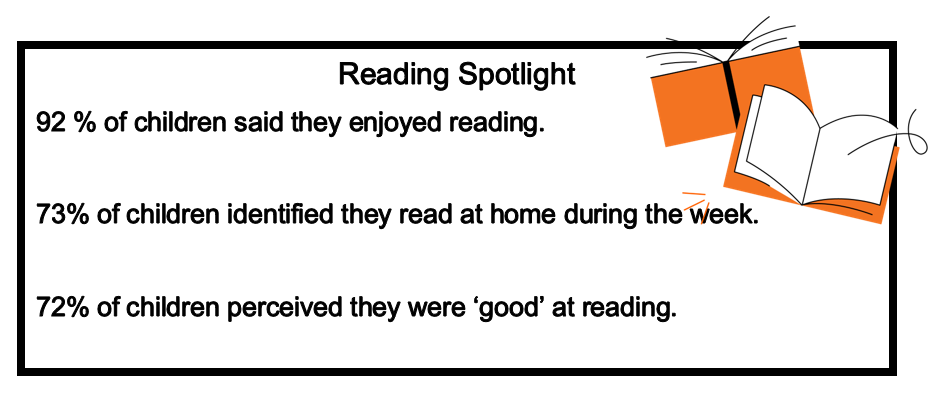
Reading at home plays an important role in helping children develop fluency, confidence and enjoyment. Children are encouraged to read at home at least three times each week and record this in their online reading record. We celebrate children’s commitment to reading through rewards and incentives, including our Reading Vending Machine and Golden Tickets.
Our pupil voice shows the positive impact of reading at Fordbridge.
Book Talk and Reading for Pleasure
Each class takes part in regular Book Talk sessions, where children enjoy high-quality texts chosen to spark discussion, curiosity and enjoyment. These sessions allow children to listen to fluent reading, explore different authors and genres, and share their ideas about books in a relaxed and engaging way. Book Talk helps all children, regardless of reading ability, to develop a love of stories and literature.
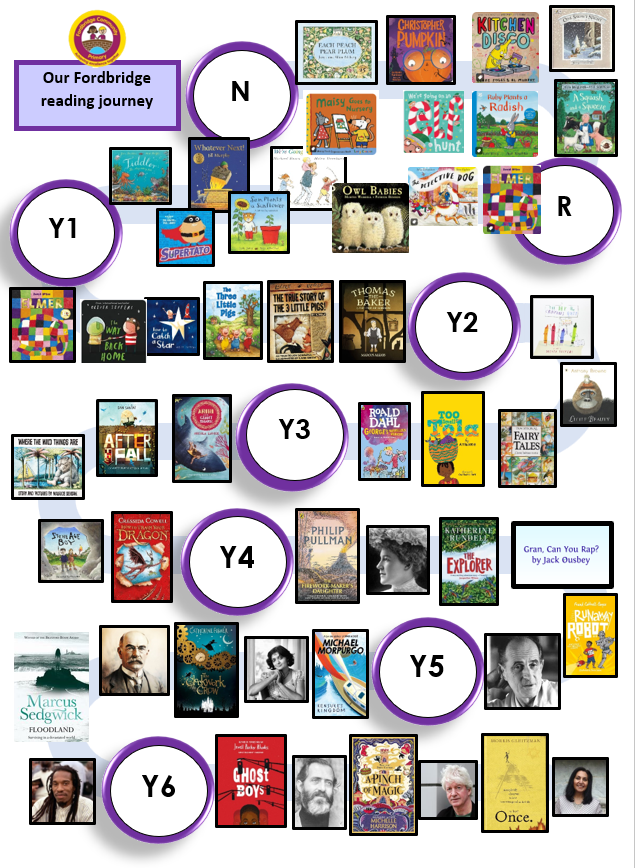
Our Fordbridge Reading Journey
Our carefully planned Fordbridge Reading Journey ensures that children experience a broad, ambitious and diverse range of texts as they move through school. From Nursery to Year 6, pupils encounter picture books, poetry, fiction, non-fiction and significant authors that help to build vocabulary, cultural understanding and a love of reading. This journey supports progression and ensures that every child is exposed to books that inspire, challenge and excite them.
Reading Enrichment and Celebrations
We believe that memorable experiences help children build positive relationships with reading.
Throughout the school year, we offer a range of enrichment activities designed to bring books and stories to life.
Reading enrichment at Fordbridge includes:
- Book Talk
- Parent workshops
- Library visits and bookshop trips
- School Council trips to select class reads
- A termly book fair, including affordable books
- Daily lunchtime book club
- After-school book club
- Virtual author visits
- Careers Day, including authors, playwrights and film writers
- Annual theatre trip for Years 1–6
- World Book Day and other reading events
- Reading Vending Machine
- A Christmas book gift for every child


Our Commitment to Reading
At Fordbridge, we believe that reading changes lives.
Our commitment is to ensure that every child has access to the teaching, encouragement and opportunities needed to become a successful reader.
Through explicit instruction, a carefully sequenced curriculum, targeted support and a strong culture of reading for pleasure, we aim to develop children who are:
-
Confident in their reading abilities.
-
Fluent and able to read with accuracy and expression.
-
Thoughtful in their understanding and interpretation of texts.
-
Curious about books, language and the wider world.
-
Independent and equipped to continue learning throughout their lives.
We want every child to leave Fordbridge with the knowledge, skills and enthusiasm to embrace future learning opportunities and experience the lifelong benefits of reading.
Achieving Excellence Together.